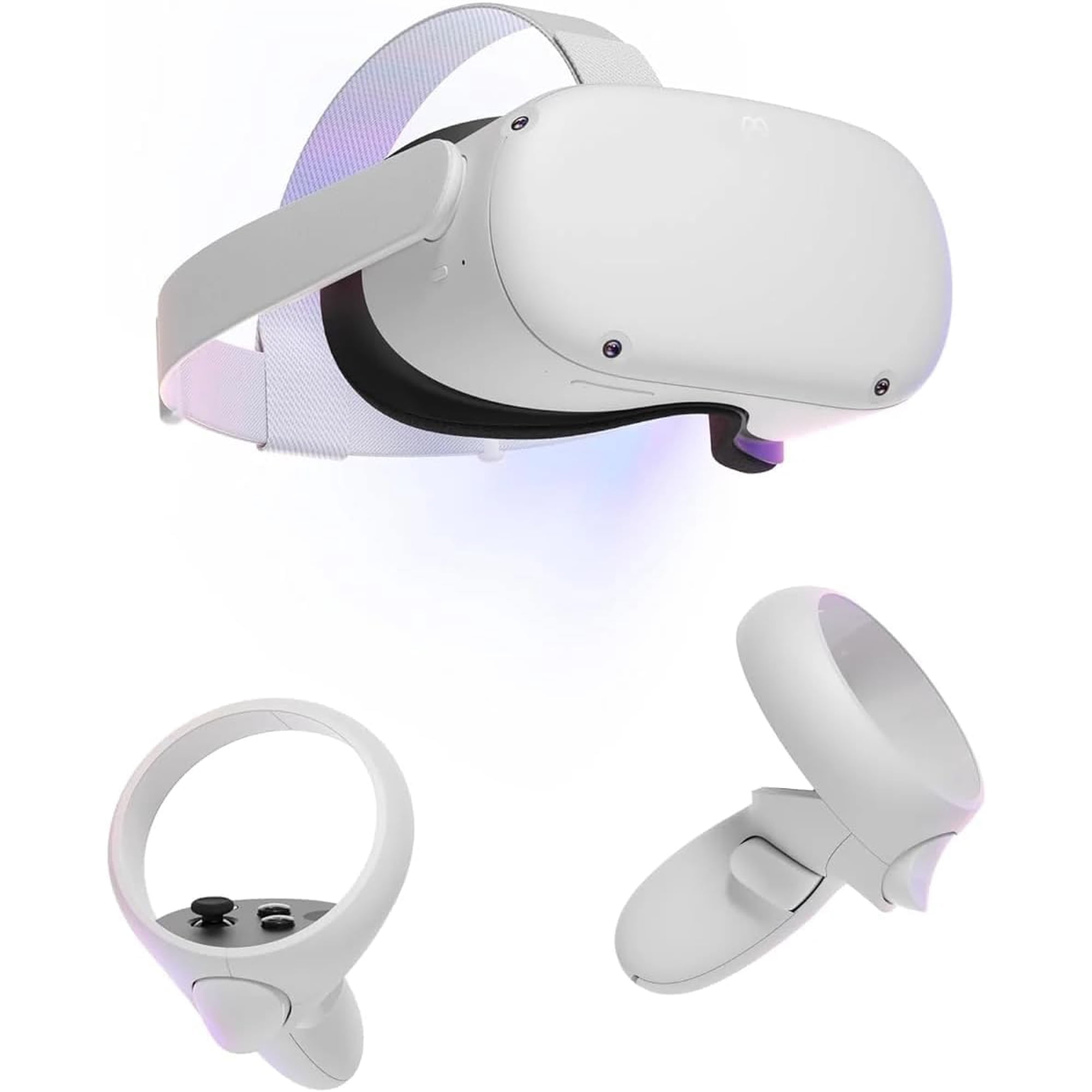
Meta Quest 2
View on AmazonThe first time I put on a VR headset at a friend's house, I walked into a wall. Literally. The Meta Quest 2 has gotten better about preventing that, but fair warning: whoever you buy this for is going to need some open floor space.
What Makes the Quest 2 Different
No wires, no PC required, no external sensors. You pull it out of the box, put it on, set up the guardian boundary with the controllers, and you're in VR within about ten minutes. That standalone simplicity is the main selling point. Previous VR systems needed a gaming PC and a room full of sensors. The Quest 2 just needs WiFi and a charged battery.
The 128GB storage holds plenty of games and apps. The built-in speakers are decent enough that you don't need headphones for casual use, though plugging in earbuds does improve the experience significantly, especially for games with atmospheric sound design.
The setup process deserves its own mention because it's genuinely painless. You draw your play boundary in AR using the controllers, and the headset remembers it. Step outside the boundary during a game and a virtual grid wall appears to warn you. It works well enough that wall collisions are rare once you set it up properly. I had mine running within about 15 minutes of opening the box, which is remarkable for a VR system.
The Experience
⭐ Fully wireless, standalone VR with no PC required ⭐ Large library of games, fitness apps, and social experiences ⭐ Hand tracking works without controllers for some apps ⭐ Can connect to a PC for higher-end VR gaming via link cable ⭐ Built-in guardian system to prevent wall collisions
Beat Saber alone has justified the purchase for people I know. The fitness apps are surprisingly effective too. Supernatural and FitXR turn workouts into something people actually look forward to, which is saying a lot. I've seen people who hated going to the gym put on a headset and do 45-minute boxing sessions three times a week because it doesn't feel like exercise. It feels like a game.
The social side of VR is underrated as a selling point. Apps like VRChat and Rec Room let you hang out with friends who are across the country. It sounds gimmicky until you actually try standing in a virtual room talking to someone. It's surprisingly more personal than a video call. For someone with long-distance friends or family, this becomes a real connection tool.
Hand tracking is another feature worth highlighting. For supported apps, you can put the controllers down and use your bare hands. It's not perfect, and most games still require controllers, but for browsing, watching videos, or navigating menus, it works well enough to feel futuristic.
The Honest Truth
The headset is front-heavy. After about 45 minutes, you feel the weight pressing on your face. Most people end up buying a third-party head strap (another $30-50) because the included elastic strap isn't great for extended sessions. The Elite Strap from Meta or a BoboVR alternative distributes weight much better and turns hour-long sessions from uncomfortable to manageable.
You need a Meta account to use it. That's a dealbreaker for some people, and I can't blame them. Meta's data practices are a valid concern. If the person you're buying for feels strongly about privacy, this might not be the right gift regardless of how cool the tech is.
Motion sickness is real, especially with movement-heavy games. Some people adapt after a few sessions, others never do. There's no way to know ahead of time, which makes this a slightly risky gift. If the recipient has ever gotten carsick easily, proceed with caution. Stationary games (like Beat Saber or Pistol Whip) are much less likely to cause nausea than games with free locomotion.
The Quest 2 is also an older model at this point. The Quest 3 exists with better specs and mixed reality features. The Quest 2 at $249.99 is still a solid entry point, but it's not the newest hardware. The upside is that the game library is mature and well-tested on this hardware, and the lower price makes it less of a gamble as a gift.
Who This Is For
Gamers, tech enthusiasts, fitness people looking for something new, or anyone who's expressed curiosity about VR. It's a crowd-pleaser at parties. Just know that some additional accessories (better strap, carrying case) might be needed to get the full experience.
It's also a surprisingly good gift for non-gamers who are curious. VR travel apps let you "visit" places around the world. Meditation apps put you on a mountain top or a beach. YouTube VR lets you watch concerts and events from front-row seats. The gaming is the headline, but the non-gaming uses keep people coming back.
Gift-Wrapping Tips
The Quest 2 box is sleek and unwraps well. If you want to go above and beyond, include a third-party head strap or a simple carrying case. These accessories cost $25-50 and dramatically improve the out-of-box experience. The recipient will need them eventually, and having them on day one prevents the "this is cool but my face hurts" reaction during the first session.
Final Verdict
The Meta Quest 2 is the most accessible way to get into virtual reality. The setup is painless, the game library is large, and the standalone design means no extra equipment. It loses points for comfort issues, the required Meta account, and being a generation behind. But for the price, it's still a fun gift that'll get a big reaction when unwrapped.
Flippe Gift Rating: 4.1 / 5 (Good)