
Spirit Island Board Game
View on AmazonI remember the first time someone brought Spirit Island to game night. I took one look at the board, the piles of tokens, and the thick rulebook, and I thought, "We're going to be here all night just learning how to play." Two hours later, I was completely hooked and already planning when we could play again.
What Makes It Different
Most board games pit you against each other. Spirit Island flips that entirely. It's a cooperative game where everyone plays as elemental spirits defending an island from colonizing invaders. You're working together, which means no one leaves the table feeling salty about losing to their best friend.
Each spirit plays completely differently. One might specialize in fear and terror, another in lightning strikes, and another in slow, creeping vines. The variety means you can play this game dozens of times and have a genuinely different experience each session.
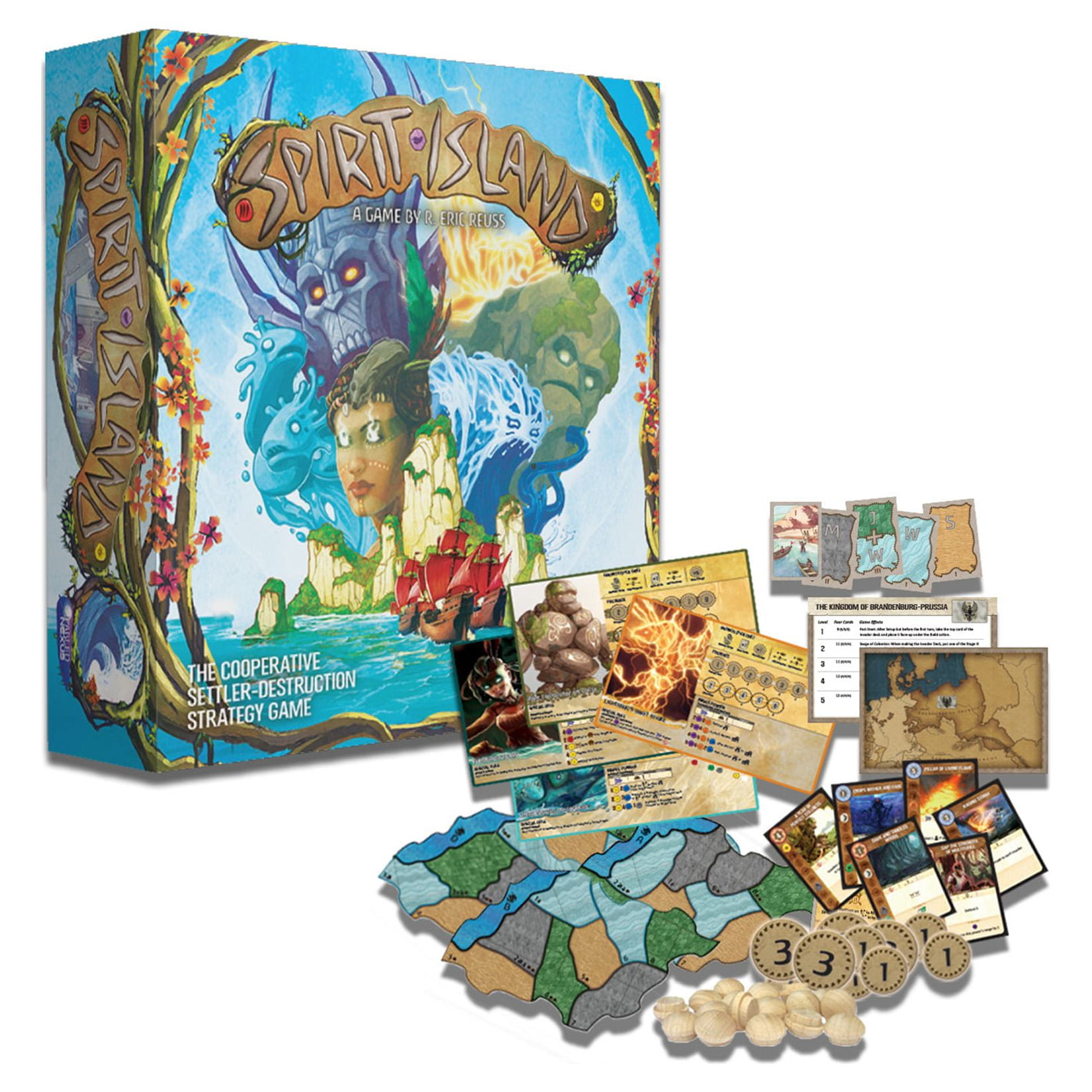
How a Typical Game Plays Out
The island starts mostly peaceful, with just a few invader settlements dotting the coastline. Each round, the invaders explore new territory, build settlements in areas they've already explored, and then ravage the land in areas they've built up. Your job as spirits is to push them back before they destroy the island's ecosystem.
What makes this tense is the timing. Spirit powers are split into "fast" powers that resolve before the invaders act and "slow" powers that resolve after. So you're constantly making calculated bets: do you play a slow power that's more impactful but means the invaders get to act first? Or do you play something weaker but faster to prevent damage right now?
The cooperative element isn't just flavor either. Spirits genuinely need each other. Lightning's Swift Strike can wipe out invaders quickly but runs out of steam in long games. River Surges in Sunlight heals the land and moves invaders around but can't kill them efficiently alone. Figuring out how your spirit synergizes with your teammates' spirits is half the fun.
The Learning Curve Is Real
I won't sugarcoat this: Spirit Island is not a casual game. The rulebook is thick, and your first playthrough will involve a lot of page-flipping and re-reading card text. Budget at least 30 minutes just for setup and rules explanation the first time around.
But once it clicks, it really clicks. The decision-making is deeply satisfying. Every turn feels like a puzzle where you and your teammates are figuring out how to best combine your powers to handle threats popping up across the island.
I'd recommend starting with the "low complexity" spirits for your first game. Lightning's Swift Strike and River Surges in Sunlight are designed to teach the basics without overwhelming you with special rules. Save the high-complexity spirits like Serpent Slumbering Beneath the Island for after you've got a few games under your belt.
Who This Is For
⭐ Strategy game fans who've outgrown Catan and Ticket to Ride
⭐ Groups who prefer cooperating over competing
⭐ People who enjoy complexity and don't mind a learning curve
⭐ Solo gamers (it plays surprisingly well with just one person)
The Replay Factor
This is where Spirit Island really earns its price tag. The base game comes with eight spirits, each with their own power deck and play style. There are also multiple adversary nations you can swap in as the invading force, each changing how the invaders behave. Add in different island layouts and scenario cards, and you've got hundreds of possible combinations before you even touch the expansions.
I've played Spirit Island probably 40 times now, and I still haven't tried every spirit. When a board game can keep pulling you back after that many plays, it's doing something right.
The difficulty scaling is also well thought out. You can crank up the adversary level from 0 to 6, with each step adding new rules and making the invaders more aggressive. This means the game grows with you. As your group gets better, you increase the challenge instead of shelving the game because it got too easy.
The Downsides
At $65, it's not cheap for a board game. And unlike simpler games that you can teach in five minutes, you'll need a patient group willing to invest time learning the mechanics.
Games also run long. Plan for 90 minutes to two hours per session, sometimes more with higher player counts. This isn't something you pull out for a quick 30-minute round before dinner.
The box is also massive. It takes up serious shelf space, and setting up all the pieces, cards, and tokens is a small event in itself. Expect about 10 minutes of setup before each game and a similar amount for teardown.
There's also a risk of one experienced player "quarterbacking" the group, telling everyone else what to do. Since it's cooperative, one bossy player can turn the experience sour. If you know the recipient plays with someone like that, it's worth a heads-up to keep an eye on it.
Gift Presentation Ideas
The box itself is large and well-designed, so it wraps up nicely as a gift. If you want to go the extra mile, throw in a set of card sleeves. Spirit Island involves a lot of card handling, and sleeves protect the power cards from wear. A $5-8 pack of standard-size sleeves shows that you put thought into the gift beyond just buying the box.
You could also print out a quick-reference player aid from BoardGameGeek. The community has made some excellent cheat sheets that condense the key rules onto a single page. Tossing that in with the gift tells the recipient "I know this is complex, and I want to help you get into it."
Final Verdict
Spirit Island is one of the best cooperative strategy games ever made. It rewards repeated play, and the theme of protecting the island from colonizers feels fresh and meaningful. If the person you're shopping for already owns Catan, Pandemic, and Wingspan, this is the natural next step. Just make sure they're the type who enjoys a meaty, thinky game and not just casual fun. For that audience, this is a home run gift that'll get hundreds of hours of table time.
Flippe Gift Rating: 4.3 / 5 (great)